A Motown Timeline: 1985
THE SUPERSTARS DOMINATE: STEVIE, RICK, LIONEL
“One day,” Berry Gordy told a roomful of students and teachers at one of America’s most prestigious universities, “I had the shocking discovery, after working with these people, teaching them to write songs and produce records, and do all the things. It hit me like a ton of bricks, that they were more talented than I was.”
“Now for a person with my ego, that didn’t sit too well,” continued Gordy, “so I didn’t tell them for a long time. But sooner or later, they found out that the master was in them. Once you believe that and understand what it is that you do, it is very hard for you not to succeed.”
It was April 17, 1985, and the Motown founder was at Yale to accept an honour as a Gordon Grand Fellow of the university. He gave an informal talk that night, candid and revealing about his life, his dreams and what he had accomplished.
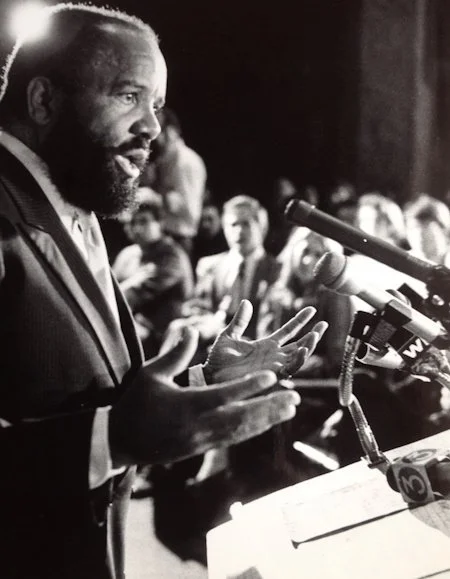
The Gordy — sorry, Gordon — Grand Fellow at Yale (photo: The Exposure Index)
By the end of that year, Gordy’s business had experienced a particularly active 12 months. One of his earliest stars seemed to be in the public eye every week, while one of his later recruits was almost as ubiquitous. Industry honours were handed out to Motown’s established names in music, while Gordy’s operation continued to make an impact in film and television.
Motown Records, under a president appointed in 1980, was still selling millions of singles and albums worldwide, albeit finding it harder to sustain its reputation as a house of innovation and influence. “The lack of developing new acts was starting to catch up with us,” admitted that chief executive, Jay Lasker, long afterwards. In 1985, the record division earned around $4.5 million in profit – below its anticipated $7 million. Much of that came from marketing its back catalogue successfully.
“Motown was a product of my search for happiness,” Berry Gordy told his Yale audience that spring. “I believe that people should be happy in what they do. When I got successful, I’d talk to the artists about it: ‘If you get tremendously rich, tremendously successful and you do it for the love of what you’re doing…you can still be very happy.’ ”
Evidence of Gordy’s achievements was being seen by visitors to Detroit’s 2648 West Grand Boulevard in February 1985. The Motown Museum was advertising itself open to the public (for free, but donations accepted) on Thursday and Friday afternoons that month – a more formal version of its willingness in previous years to show people around the two-story Hitsville U.S.A. (In 2005, the museum officially celebrated its 20th anniversary.)
Now, to the detail. Below is an attempt, selective rather than exhaustive, to convey 1985’s endeavours and activity at Motown. It’s divided into three sections: the first, a chronological run-down of significant dates during those 12 months, followed by examples of notable single and album releases. (If anything important is missing, feel free to point it out.) When a 45 or album topped the Billboard R&B or pop charts, that entry is shown in bold-face italics. Other Motown timelines can be found here, under the “Looking Ahead, and Back” category.
January 15: Pepsi-Cola announces that filming has been completed on three new TV spots featuring Lionel Richie. These will debut on the Grammy Awards telecast on February 26. Last year, he signed a commercial deal with the drinks company, which sponsored his tours then and into this year.
January 28: Lionel Richie hosts the latest American Music Awards, held at the Shrine Auditorium, Los Angeles, where he also performs – and wins six prizes. Immediately afterwards, a number of the artists at the AMAs take part in recording “We Are The World,” written by Richie and Michael Jackson. Under the name USA For Africa, the track is released in March as a fundraiser to fight famine in Africa. Among those on the recording are Richie, Jackson, Stevie Wonder, Diana Ross and Smokey Robinson.
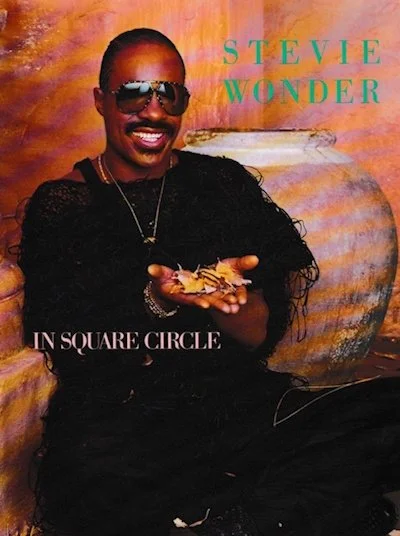
A ‘Circle’ delayed: from April to September
February 5: Motown opens its first New York office in some years, headed by East Coast A&R director Sergio Munzibai, with plans to sign new, young acts to the company.
February 14: Stevie Wonder is arrested, together with a group of anti-apartheid demonstrators, outside the South African embassy, in Washington, D.C. He calls himself a “conscientious criminal” protesting oppression in that nation.
February 26: Lionel Richie’s Can’t Slow Down is named as Album of the Year at the 1984 Grammy awards, televised on this date at the Shrine Auditorium in Los Angeles. He and James Anthony Carmichael are also named Producer(s) of the Year, sharing the honour with David Foster. Stevie Wonder’s “I Just Called To Say I Love You” wins none of its three nominations.
March 4: Motown announces the appointment of Jay Lasker as president of the Motown Music Group, a new post which includes responsibility for Jobete Music. He had joined in 1980 as president/COO of the record company. Last month, Robert Gordy was promoted to vice chairman of the music publishing division.
March 7: Lionel Richie is sued for copyright infringement in U.S. District Court in Los Angeles. Gene Thompson claims that the Motown artist’s “Hello” and “Stuck On You” are copied from his 1979 copyrighted song, “Somebody’s Got To Love Her.” (In 1991, Richie is cleared of the allegations by a federal jury.)
March 20: The Four Tops and the Temptations open a five-night, eight-show booking at New York’s Gershwin Theatre, dubbed “An Evening of TNT.”
March 22: Berry Gordy’s The Last Dragon is released in the U.S., going on to gross $25 million in boxoffice takings. It’s described in at least one newspaper as “the first rock video kung fu movie.” The Motown soundtrack album was released in January; one track, “Rhythm Of The Night” by DeBarge, becomes a Top 3 success on the Billboard and Cash Box pop charts in Apri.
March 25: At the 57th Academy Awards ceremony in Los Angeles, Stevie Wonder wins the Oscar for Best Original Song with “I Just Called To Say I Love You,” from the 1984 soundtrack of The Woman In Red. He accepts the award “in the name of Nelson Mandela” – remarks which, the next day, lead the South African Broadcasting Corporation to impose a broadcast ban on his music in the apartheid nation.
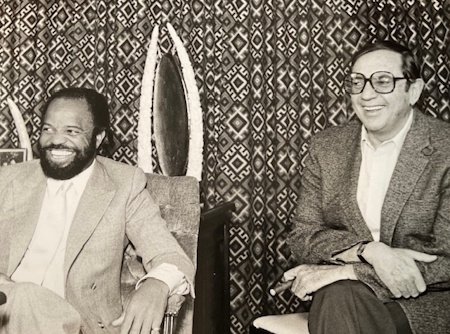
Cigar in hand, Jay Lasker (right) chuckles with the Chairman
March 30: Stevie Wonder previews material from his forthcoming In Square Circle album at the NARM retail convention in Hollywood, Florida. It’s reported to be due for release in April – but actually comes out in September.
April 6: The Mary Jane Girls’ “In My House” tops Billboard’s Dance/Disco chart for the first of two weeks. It also peaks inside the Top 10 of the Hot 100 in June.
April 11: It’s announced that Berry Gordy will visit Yale University as a Gordon Grand Fellow on April 17-18. It marks the first time a recipient of that honour has been selected from the recording industry.
April 13: Post-Motown, Diana Ross reaches the Top 10 of the Billboard Hot 100 with “Missing You,” a tribute to Marvin Gaye. Written by Lionel Richie, it was produced by him and James Anthony Carmichael.
May: Rick James sues brewing company Anheuser-Busch for advertising his appearance (with the Stone City Band) at last year’s Budweiser Superfest concerts, even though no agreement had been reached for the shows.
May 6: The David Ritz biography of Marvin Gaye, Divided Soul, is published by McGraw-Hill. “It is the story of one brilliant, scary man whose music came together even as his life remained unwrapped,” writes one reviewer.
May 8: Motown Music Group president Jay Lasker tells the Los Angeles Times that the company has been approached about acquiring the recorded music division of Warner Communications, Inc. “We are interested,” he says. WCI refutes the claim.
May 13: For campaigning against apartheid in South Africa, Stevie Wonder is honoured by the United Nations. He makes a special appearance at the U.N. general assembly in New York on this, his birthday.
May 19:Motown Returns to the Apollo is televised by NBC-TV, featuring Stevie Wonder, Smokey Robinson, Diana Ross, the Commodores, the Four Tops, the Temptations, Martha Reeves and Mary Wells, among others. The two-hour, Motown Productions special is hosted by Bill Cosby.
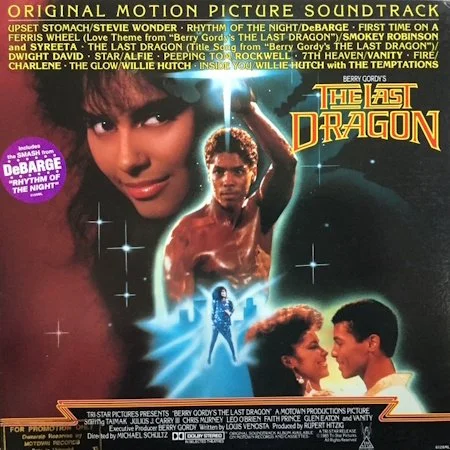
‘The first rock video kung fu movie’
May 24: The National Association of Broadcasters transmits Stevie Wonder’s “Don’t Drive Drunk” video by satellite to TV stations across the U.S. The five-minute clip was funded by the Advertising Council. The track comes from Wonder’s The Woman In Red soundtrack album; it was to have been released as a single (Tamla 1774) but Motown scrapped the plan.
May 25: A friend of Stevie Wonder, Steve Ambrose, calls him live by phone during a Religious Freedom Concert sponsored by the Church of Scientology. The 30-minute call is amplified and carried on the sound system of the venue, the Portland Meadows Amphitheater.
July 13: During the all-star, transatlantic Live Aid benefit concert, Daryl Hall & John Oates bring out Eddie Kendricks and David Ruffin to perform during their set at the JFK Stadium in Philadelphia. The Four Tops also join the show’s line-up.
August: Motown’s former artist development maven, Maxine Powell, earns rare media attention via Associated Press, with an interview published in newspapers nationwide. “They weren’t the best singers in the world,” she says of the company’s artists, “but they all wanted the same thing, and they worked hard.”
August: Brouhaha Records in the U.K. releases a new solo single by the lead singer of Musical Youth, Dennis Seaton, “What Ya Talkin’ About,” written and produced by Stevie Wonder.
August 9: The Four Tops, Stevie Wonder, DeBarge and Vanity appear on NBC-TV’s The Motown Revue Starring Smokey Robinson, the first music-variety show transmitted in stereo. The series has a six-episode run.
August 10: In Billboard, Rick James claims that his companies have a total of 75 staff, as they direct the careers of the Mary Jane Girls, the Stone City Band, Process & the Doo Rags and Val Young, as well as the star himself.
August 29: For $101,000, Motown Records acquires film and TV rights to the life story of the late Marvin Gaye, in an auction ordered and overseen by a Superior Court judge in California. The singer’s creditors claim the sum fails to recognise the story’s true worth. Gaye’s estate will receive 2.5 percent of the profits from any such film or TV project.
September 7: The opening of a new Jobete Music office in Nashville is covered in Cash Box, with Roger Gordon named director of operations by recently-recruited Jobete president, Lester Sill.
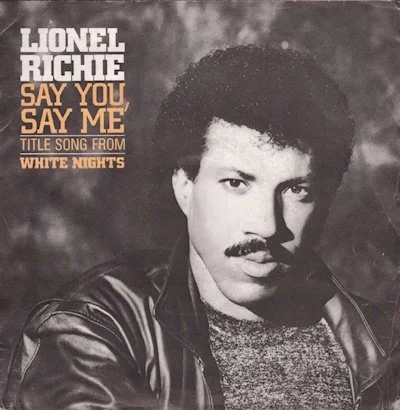
Spinning the single too soon leads to a lawsuit
September 13: Lushus Daim & The Pretty Vain’s More Than You Can Handle is the first album release under Motown’s new production deal with Leon Sylvers’ Conceited label, signed this summer.
September 18: The South African Broadcasting Corporation lifts the ban imposed on Stevie Wonder’s music six months earlier, saying its purpose of “showing its objection to the blatant politicisation of music” by the singer had been achieved.
September 21: Cliff Richard’s “She’s So Beautiful,” written and produced by Stevie Wonder, reaches the Top 20 of the U.K. charts. The song features in the the British stage musical Time, created by Dave Clark.
September 22: Motown Returns To The Apollo wins an Emmy award for Best Variety, Music or Comedy Program. Suzanne de Passe accepts the award as the TV special’s executive producer.
September 27: Motown’s hit movie soundtrack album for The Big Chill is RIAA-certified as double platinum. It was released in September 1983, and goes on to reach six times platinum in 1998.
October 3: Stevie Wonder is sued for plagiarising “I Just Called To Say I Love You” in U.S. District Court in Los Angeles from a song written in 1978 by Lee Garrett and Lloyd Chiate. (When the case goes to court five years later, a jury acquits Wonder.)
October 6: The American Cancer Society salutes Stevie Wonder with its life achievement award at the Century Plaza Hotel, Los Angeles. He performs a 13-song set, including a pair of duets with Dionne Warwick, co-chair of the gala event. MC is Smokey Robinson.
October 13: Variety reports that Motown and Lionel Richie’s Brockman Enterprises are suing radio stations in Detroit and Cleveland for the premature broadcast of his “Say You, Say Me,” from the soundtrack of the White Knights movie. The track is due for release as a single on October 29.
October 21: On tour in the U.K., Martha Reeves & the Vandellas draw a crowd of 2,000-plus for their date in Wakefield, Yorkshire. Later this month, the singer guests on popular British TV talk/music show Des O’Connor Tonight.
November 5: On the latest episode of NBC-TV’s The A-Team, Rick James and Isaac Hayes appear as guest stars. Playing himself, James recruits the team to protect an imprisoned friend marked for death by fellow inmates.
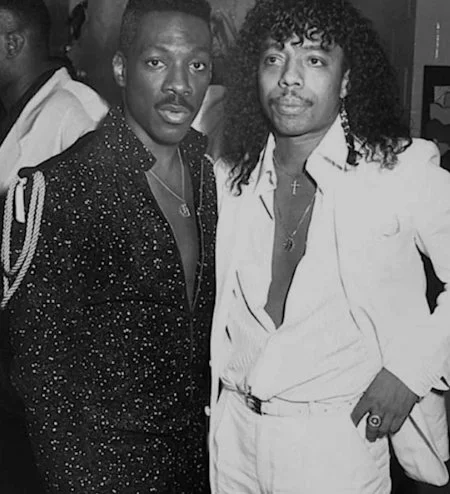
Eddie ‘n’ Rick: ready to party, all the time
November 6: On his latest U.S. tour, Rick James performs for three nights at the Circle Star Theater, Sacramento. Also on the bill are the Mary Jane Girls.
November 9: Stevie Wonder’s In Square Circle begins its 12-week run at Number One on Billboard’s Top Black Albums countdown. Two weeks later, it peaks at No. 5 on the trade weekly’s main album charts. On December 4, it is certified double platinum by the Recording Industry Association of America for sales of two million copies.
December 16: The Commodores kick off six nights of shows at the Melbourne Hilton Hotel in Australia, following a run at the Sydney Hilton. Their “Nightshift” was a Top 20 hit in the country earlier this year.
December 19: Lionel Richie’s album Can’t Slow Down is certified diamond by the RIAA for U.S. sales of ten million copies.
December 25: Diana Ross and her second husband, Arne Naess, host a champagne party at their home in Connecticut. Among the guests are Rick James and his mother, Betty Gladden.
December 28: Eddie Murphy’s “Party All The Time,” written and produced by Rick James, peaks at No. 2 on the Billboard Hot 100, held from the summit by Lionel Richie’s “Say You, Say Me.”
SELECTED SINGLES (by release date)
January 8: Dazz Band, “Heartbeat,” Motown 1775
January 29: DeBarge, “Rhythm Of The Night,” Motown 1770 (#1 R&B, #3 pop)
February 2: Thomas McClary, “The Man In The Middle,” Motown 1779
February 7: Alfie, “Star,” Motown 1777
February 27: Rockwell, “Peeping Tom,” Motown 1782
March 13: Rick James, “Can’t Stop,” Gordy 1776
April 23: The Commodores, “Animal Instinct,” Motown 1788
April 30: Four Tops, “Sexy Ways,” Motown 1790
May 14: DeBarge, “Who’s Holding Donna Now,” Gordy 1793
May 21: Michael Lovesmith, “Break The Ice,” Motown 1794
May 21: Rick James, “Glow,” Gordy 1796
May 21: Willie Hutch, “Keep On Jammin’,” Motown 1797
June 5: Mary Jane Girls, “Wild And Crazy Love,” Gordy 1798
July 30: KoKo Pop, “Brand New Beat (Part 1),” Motown 1803
August 6: Dennis Edwards, “Coolin’ Out,” Gordy 1805
August 13: El DeBarge, “You Wear It Well,” Gordy 1804
August 20: Stevie Wonder, “Part Time Lover,” Tamla 1808 (#1 R&B, #1 pop)
August 27: Lushus Daim & The Pretty Vain, “More Than You Can Handle,” Motown 1801
September 4: Val Young, “Seduction,” Gordy 1812
September 12: Duke Jupiter, “The Line Of Your Fire,” Morocco 1815
October 22: The Temptations, “Do You Really Love Your Baby,” Gordy 1818
October 29: Lionel Richie, “Say You, Say Me,” Motown 1819 (#1 R&B, #1 pop)
October 29: El DeBarge, “The Heart Is Not So Smart,” Gordy 1822
November 5: Stevie Wonder, “Go Home,” Tamla 1817
December 17: Smokey Robinson, “Hold On To Your Love,” Tamla 1828
SELECTED ALBUMS (by release date)
January 15: The Commodores, Nightshift, Motown 6124 (#1 R&B, #12 pop)
January 15: Original Soundtrack, The Last Dragon, Motown 6128
January 15: Original Soundtrack, The Flamingo Kid, Motown 6131
January 22: Rockwell, Captured, Motown 6122
February 13: The Mary Jane Girls, Only Four You, Gordy 6092
February 27: DeBarge, Rhythm Of The Night, Motown 6123
March 19: The Emotions, If I Only Knew, Motown 6136
March 22: Grover Washington, Jr., At His Best, Motown 6126
April 16: Rick James, Glow, Gordy 6135
April 16: Maureen Steele, Nature Of The Beast, Motown 6141
May 17: Four Tops, Magic, Motown 6130
June 11: Willie Hutch, Making A Game Out Of Love, Motown 6142
June 11: Michael Lovesmith, Rhymes Of Passion, Motown 6145
June 18: Dennis Edwards, Coolin’ Out, Gordy 6148
July 16: Val Young, Seduction, Gordy 6147
July 16: The Dazz Band, Hot Spot, Motown 6149
August 20: KoKo Pop, Secrets Of Lonely Boys, Motown 6155
September 13: Stevie Wonder, In Square Circle, Tamla 6134 (#1 R&B, #5 pop)
November 12: The Temptations, Touch Me, Gordy 6164
History notes: as before, a great many sources have enabled this and previous Motown timelines. Among them on this occasion are Joel Whitburn’s Billboard and Cash Box chart books from Record Research; Sharon Davis’ The History of Motown; J. Randy Taraborrelli’s Motown: Hot Wax, City Cool & Solid Gold; and Thomas O’Neil’s The Grammys. Thanks to all, and not a few others.
Music notes: another year, another Spotify playlist, this one including several of the new Motown acts of the time, whose breakthrough was not achieved by the company. The 1985 Motown releases apparently not on streaming services include “Break The Ice” by Michael Lovesmith, “Keep On Jammin’” by Willie Hutch, “More Than You Can Handle” by Lushus Daim, and “Just Gets Better With Time” by Alfie Silas.