Marvin Memories (and a 'Stolen' Song)
CHART-TOPPING TRIBUTES TO THE PRINCE OF MOTOWN
It was quite a coincidence, considering how many months had passed since that tragic death.
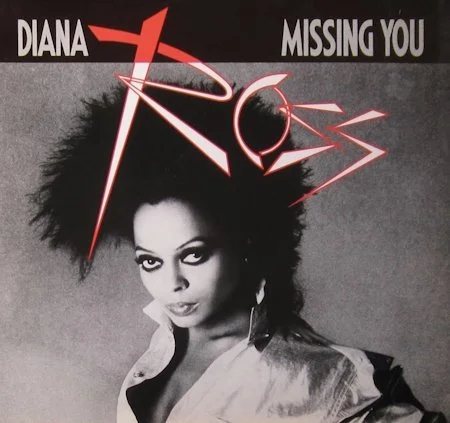
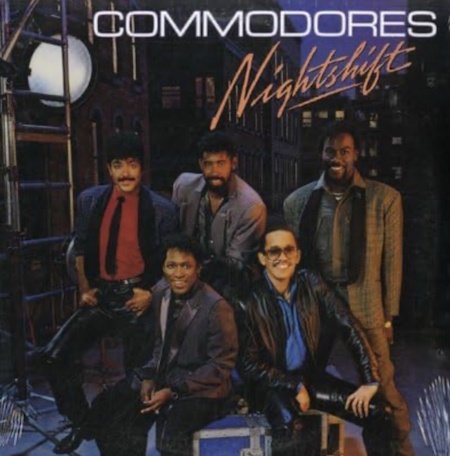
Diana Ross’ “Missing You” and the Commodores’ “Nightshift” were back-to-back Number One hits on the Billboard and Cash Box R&B charts for the week ending March 16, 1985 – and both songs, of course, were in tribute to Marvin Gaye, who was killed by his father on April 1, 1984.
The inspiration – and chart dominance – may have been what they had in common, but there were different points of origin. Not to mention at least one different result: “Nightshift” delivered for the Commodores their ninth Grammy award, while Ross continued to wait for her first such blessing.
‘A pool of ruby light, alone and vulnerable’
“Missing You,” written and co-produced by Lionel Richie, apparently began as a conversation between Ross and Smokey Robinson “about how we were missing Marvin,” she once recalled, “and what he meant to us, as well as to music. Then Lionel and I got to talking about how we need to tell people that we love them while they’re still alive. Lionel used all this to write that beautiful and special song.”
Richie himself goes into more detail in his newly-published autobiography, Truly. When he and Ross were collaborating on “Endless Love,” he recalls being asked if he’d be willing to write a song for her at some point in the future. “Of course” was his response.
“Not long after Marvin’s sudden death,” Richie remembers in the book, “I heard from Diana, who was working on an album and wanted to include a song from me on it. Pleased to fulfil my promise, I said yes and then asked her what she might want to say in a song.” Came the reply, according to Truly, “I loved Marvin very much and I miss him so, so much. I would love to record a song about the tragedy that he left us.”
And so he wrote and she sang, delivering “Missing You” in mid-1984 for her fourth post-Motown album, Swept Away, as released by RCA Records in the U.S. that September. The Commodores’ longtime creative partner, James Anthony Carmichael, arranged and co-produced the track with Richie, who also played keyboards. The 45 came out in November, and swiftly made its chart debut the following month.
The subsequent promotional video for “Missing You” maintained Ross’ links with her past. It not only featured footage of Gaye, but also images of other fallen stars of Motown, namely, Florence Ballard of the Supremes and Paul Williams of the Temptations.
“Missing You” secured a boost when MTV Networks launched its second music video channel on New Year’s Day, 1985. Video Hits One (VH-1) opened with the compelling clip of Gaye performing “The Star-Spangled Banner” at the National Basketball Association’s All-Star Game of ’83, immediately followed by the Ross video. The latter received another four plays during the new channel’s first 12 hours of airtime, when media attention was substantial, not to mention a viewing audience of millions.
‘A powerful kind of feeling’
For its part, “Nightshift” also broke quickly upon its release by Motown on December 18, 1984, with radio stations in Washington, D.C. and Pittsburgh leading the charge, soon followed by a promotional video. The song’s appeal was all the stronger for its lyrical tribute to Jackie Wilson, in tandem with Gaye. The two stars had died within weeks of each other, with Wilson succumbing to pneumonia on January 21, 1984 after more than eight years in a coma, induced by a heart attack on stage (while singing “Lonely Teardrops”) in September 1975.
As for the Commodores, they had been going through difficulties – and a lack of significant hits – since the departure in 1982 of Richie and producer Carmichael, and then guitarist Thomas McClary two years later. At that point, the group recruited J.D. Nicholas as one of their lead singers; he was formerly with the British-based band known as Heatwave.
The authorship of “Nightshift” was credited to Franne Golde, Dennis Lambert and the Commodores’ drummer, Walter Orange (he and Nicholas handled lead vocals on the recording, one after the other). Golde was a singer/songwriter who had co-written hits for Diana Ross (“Gettin’ Ready For Love”) and Dennis Edwards (“Don’t Look Any Further”). On the latter, she collaborated with songwriter/producer Lambert, who had his own creative credentials from working with the likes of Lorraine Ellison, Glen Campbell, Tavares, Natalie Cole and the post-Motown Four Tops.
The Commodores had approached Lambert to produce their tenth album. As Golde told Fred Bronson for The Billboard Book Of Number One Rhythm & Blues Hits, “Each member wanted to write, so they each submitted ideas. One of them, by Walter Orange, was this little groove he had going, which was the bass line to ‘Nightshift.’ ”
‘THAT SONG SPOKE FOR ITSELF’
On another occasion, Golde explained that Orange also had the lyric line, “Marvin, he was a friend of mine.” She continued, “When I heard the tape, I flipped. Within ten minutes we had decided it should be like a modern, R&B version of ‘Rock And Roll Heaven.’ ” (Lambert had co-produced that 1974 hit for the Righteous Brothers.)
Other members of the Commodores shared their own “Nightshift” memories. Bass player Ronald LaPread told Lynn Van Matre of the Chicago Tribune, “We wanted to do a tribute to Marvin Gaye because what happened to him was such a fearsome tragedy. Originally, we thought of it as a throwaway song, something to take up space on the album. But once we got everything recorded, that song spoke for itself. It has a controlling air to it, and that’s a powerful kind of feeling.”
‘A suffocated spirit of collaboration’
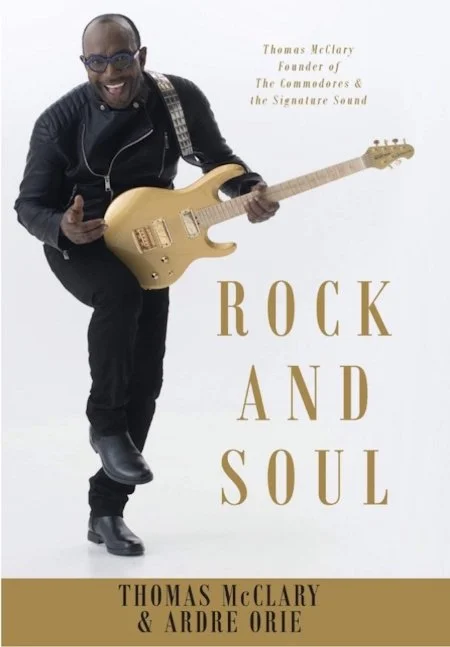
Yet Thomas McClary, who was still with the group at the time, felt robbed. “We were preparing to record another record, and I had been creating some new music,” he declares in Rock And Soul, his 2017 autobiography. “I played them some of my songs, one of which revealed an innovative sound with an arrangement that was quite different. There was a sustaining bass sound that caught everyone’s attention.
“I was trying to create something that we had not done before, because I knew that the public would wonder if we had what it took to keep the hits coming in the absence of Lionel.” According to McClary, Dennis Lambert said, “Wow, that is amazing. Are you going to submit that song for the record?”
“The next thing I knew,” writes McClary, “[Lambert] invited us back to listen to a song called ‘Nightshift.’ As I listened, it was more than familiar. It was the concept that I had played for them. They had taken my concept and created a new song without adding my name to the credit. Walter Orange and Dennis Lambert had stolen my musical concept and arrangement. The spirit of collaboration had been suffocated, at least as far as collaborating with me.”
As it was, the Commodores’ income from the sales of “Nightshift” would have been substantial, as would the songwriting and performance royalties earned worldwide by Golde, Lambert and Orange. In addition to its R&B success, the single was Top 5 on both the Billboard and Cash Box pop charts. In the U.K., it went Top 3 and was certified silver for 200,000 sales, while it was also Top 10 in Australia, Canada, Germany, Ireland and the Netherlands, among other countries. In 2017, “Nightshift” was featured in a TV advertising campaign for South African telecom giant MTN, and in 2022, the song was revived by Bruce Springsteen on his Only The Strong Survive album, and included in his subsequent tour setlist.
Preceding “Nightshift,” Diana Ross’ elegy to Marvin Gaye crossed from its R&B peak to the upper reaches of the Billboard Hot 100 – and became the last such Top 10 success of her recording career. The song resonated, too, with audiences on her 1985 North American concert dates. “The Gaye tribute provided the most moving interlude of the evening,” wrote newspaper critic John Davis of the superstar’s springtime show that year in Austin, Texas, “as Ross sang the Lionel Richie song with a genuine ache, trapped in a pool of ruby light, alone and vulnerable.”
It’s an image worthy of Marvin Gaye, and of the millions worldwide who have adored, revered and missed him over the past four decades.
Tell me why the road turns…
Music notes: among Diana Ross’ various performances of “Missing You” is this one from The Motown Revue Starring Smokey Robinson, his 1985 summertime TV series. It’s a duet between the two of them, which – on this occasion – is more about mutual admiration than memories of Marvin. But that’s OK, given Robinson’s role in Ross’ career in the early days of Motown.