A Motown Timeline: 1979
HITS AND MISSES, LAYOFFS AND LIABILITIES, A ‘HORRIBLE’ MOVIE
Perhaps Marvin Gaye should have donated the earnings from Here, My Dear to his brother-in-law instead.
Then again, it was his worst-selling album in years* and so the money would hardly have helped Motown during a difficult financial period. By the end of 1979, as Berry Gordy later admitted in his autobiography, the business was effectively bankrupt.
At first glance, it should have been a prosperous 12 months. Here, My Dear had just been released in December ’78; a new Stevie Wonder album was being lined up for March; the Commodores’ worldwide success showed no signs of slowing down; Diana Ross was going on the road in the spring, to accompany her new album, as was Rick James. And mid-year, the company appointed a new senior A&R executive, Don Ellis, who was loaded with experience from many years at CBS Records.
A heartfelt (and heart-shaped) tribute
In the event, the results were decidedly mixed. Here, My Dear failed to reach the Top 10 and yielded no hit singles. Stevie Wonder’s Journey Through The Secret Life of Plants, a soundtrack album, was stymied by the movie’s near-invisibility; and Ellis was gone in nine months.
The Ross ’n’ Rick albums (The Boss, Bustin’ Out Of L Seven) did reasonably well – Top 20, both – while the Commodores’ Midnight Magic went Top 3. Teena Marie’s debut LP, Wild and Peaceful, reached the Top 20 of the R&B charts, and Bonnie Pointer’s “Heaven Must Have Sent You” became a substantial pop hit. Other new acts made less of an impact, including Finished Touch, Patrick Gammon, Shadee, Keith & Darrell, Platinum Hook and Apollo (whose line-up included Kerry Gordy, Berry’s third son).
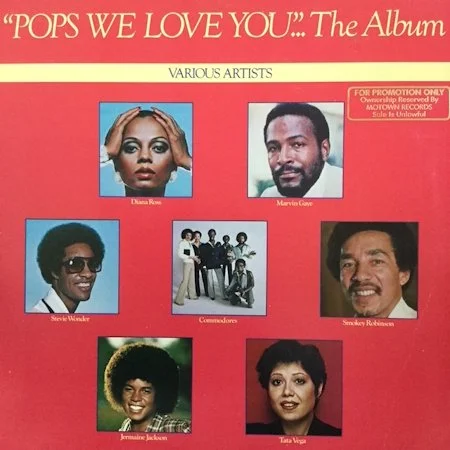
Another project which didn’t do particularly well, but attracted a lot of media attention, was “Pops, We Love You,” a tribute to Berry Gordy, Sr., recorded by Diana Ross, Marvin Gaye, Smokey Robinson and Stevie Wonder. The song was custom-composed by Marilyn McLeod and Pam Sawyer to commemorate the elder Gordy, who had died the previous November. Two versions of it – one given a disco mix – appeared on Pops, We Love You…The Album in April, and then, as Father’s Day approached in June, Motown issued a heart-shaped, red vinyl edition of the title track.
The company had recently set up a disco division, and even a separate label, Motown Disco, through which commercial 12-inch releases were channelled. Unfortunately, this proved to be the year when the genre began losing its shine, compounded by the “Disco Demolition Night” at Chicago’s Comiskey Park on July 12, organised by a local radio DJ. Some 50,000 citizens took part (20,000 had been expected) and the near-riot became headline news – and bad publicity – nationwide.
Meanwhile, Don Ellis was grappling with his A&R responsibilities. “What I viewed as my job coming into Motown was to tighten the roster and make it as compact and solid as we could,” he told Record World, adding, “I wouldn’t rule out anything.”
Ellis continued, “Jazz is an obvious area we should be able to make an impact in.” To that end, an album by what was called Motown’s “first fusion entry,” Dr. Strut, was released in May. Sales proved negligible. Another signing was British synth-pop band, the Planets. By February 1980, Ellis had exited; there was, he said, a “disagreement” over Motown’s creative direction.
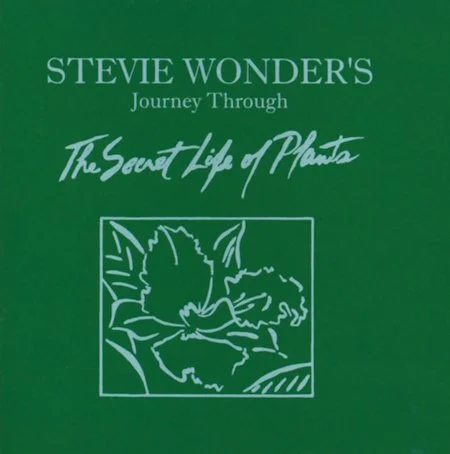
Expectations were initially high for Stevie Wonder’s Journey Through The Life of Plants, and plans were sketched for the musician to tour Europe in March and perform in cities where the film was premiered. But the movie studio’s commitment proved fleeting, and Wonder had to add fresh material to make the 2LP set more attractive – which caused its release to be delayed until late October. Even then, its shelf-life was relatively short (22 weeks on the main Billboard album countdown) when compared to Songs In The Key of Life (80 weeks) and Talking Book (109).
Banking ‘everything’ on the movie
“They banked everything on the motion picture,” then-president Barney Ales told me some years ago, “and the motion picture was horrible. I said, ‘Make it one album, and make it the best of whatever is left.’ That was one of the first times that Berry and I really got into a disagreement.” (That may also have contributed to Ales’ Motown exit at the end of the year.)
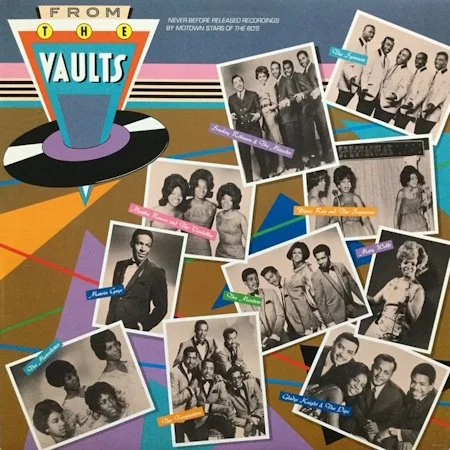
At the beginning of ’79, there was a modest but welcome release: From The Vaults, a ten-track compilation on the Natural Resources imprint of previously-unissued material. Mary Wells’ “Drop In The Bucket” (1962) was the oldest, Marvin Gaye’s “Sweeter As The Days Go By” (1966) the latest, and there were tracks by the Supremes, the Marvelettes, the Temptations, the Miracles and more.
Such fan delights, however, were never going to significantly bolster the bottom line. Despite Motown Industries’ gross revenues of $58 million (approximately $277 million today) the previous year, the business was obliged to lay off 80 employees by the autumn of 1979. It didn’t help that Number One hits were in short supply: the Commodores delivered the year’s only pop or R&B chart-toppers, with one single (“Still”) and one album (Midnight Magic), while Diana Ross’ “The Boss” topped the Billboard disco charts.
Now, to more detail. Below is an effort, selective rather than exhaustive, to convey 1979’s endeavours and progress at Motown. It’s divided into three sections: the first, a chronological run-down of significant dates and events during those 12 months, followed by examples of notable single and album releases. If a 45 or album topped the Billboard R&B or pop charts, that entry is shown in bold-face italics. Other Motown timelines can be found here (in the very last category).
MOTOWN 1979
January: Motown Records launches its marketing campaign for Marvin Gaye’s Here, My Dear, issued two weeks ago. The drive includes TV ads in select markets, saturation radio buys nationwide, and retail display kits featuring giant-size, four-colour posters. Major-market station WWRL New York is among the first to spin the album’s initial 45, “A Funky Space Reincarnation (Part 1).”
Motown draws upon its unreleased resources
January: A compilation of previously-unissued Motown recordings – a rare move at the time – is out on its Natural Resources imprint. Tracks on From The Vaults are by Marvin Gaye, Mary Wells, the Supremes, Gladys Knight & the Pips and others. Content was coordinated by Motown staffer Tom de Pierro.
January 1: Peter Benjaminson’s The Story of Motown is published by Grove Press. It’s regarded as the first such U.S. book to document Berry Gordy’s company and its success; the author worked at the Detroit Free Press from 1970-76.
January 5: Stevie Wonder finalises a $2.2 million deal to acquire KJLH-FM, Los Angeles, through his Taxi Productions, Inc. It requires FCC approval. The 14-year-old station has been soft R&B/jazz/MOR-formatted, and former Motown Records president Ewart Abner negotiated the pact on Wonder’s behalf.
January 6: Motown Industries’ chief operating officer, Mike Roshkind, is quoted in the trade press that the record company will reduce its output this year to improve its financials. He adds that there are plans to videotape every forthcoming concert by Motown artists.
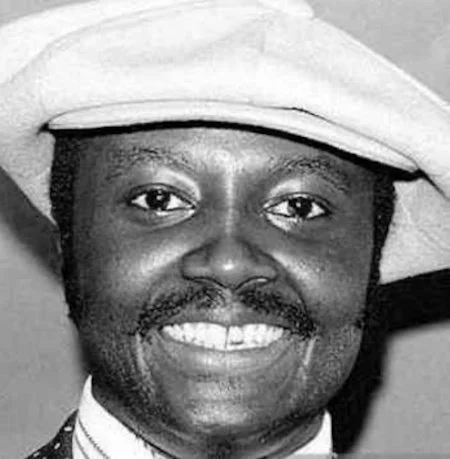
January 15: Stevie Wonder headlines an annual benefit concert for the Martin Luther King Jr. Center for Social Change, held at the Omni Coliseum in Atlanta. During the performance, he pays tribute to singer/songwriter Donny Hathaway, who died in New York the previous day.
January 19: The annual international music industry conclave, MIDEM, opens in Cannes, during which Motown holds a special playback of Stevie Wonder’s forthcoming movie soundtrack for The Secret Life of Plants.
January 20: Linda Ronstadt’s revival of the Miracles’ “Ooo Baby Baby” reaches the Top 10 of the Billboard and Cash Box charts, becoming her third successful dip into the Jobete Music catalogue.
February 15: The 1978 Grammy awards show is televised from the Shrine Auditorium in Los Angeles, but Motown wins nothing with its three nominations: “Three Times A Lady” (twice) and the Commodores’ album, Natural High. Diana Ross and Michael Jackson’s “Ease On Down The Road” (from the MCA soundtrack of The Wiz) is also snubbed.
Stevie on Donny: ‘I wish I were as talented as he’
February 23: Motown Records kicks off a three-day meeting in Los Angeles with distributors and wholesalers. Executive VP/GM Mike Lushka uses the occasion to deny rumours that the company is being sold.
March 2: MCA chairman Lew Wasserman hosts a “Salute to President and Mrs. Jimmy Carter” at the Beverly Hilton, Los Angeles, and Berry Gordy, Jr. is among the guests.
March 10: Motown has formed a disco department, according to Billboard, under the supervision of Iris Gordy and Mike Lushka. The Motown Disco label is part of the initiative, which will feature new acts as well as the company’s established names.
April 1: Mary Wilson signs to Motown as a solo artist via her company, Turkessa Enterprises. Her first 45, “Red Hot,” and an album of the same name are released in August.
April 19: A disturbance involving gate crashers during a Rick James concert at Boston’s Orpheum Theater results in injuries and arrests. Nearby property was also damaged.
April 21: The late Berry Gordy, Sr. is posthumously honoured by the National Conference of Black Mayors at its “Tribute to a Black American” dinner, held at the Sheraton-Atlanta Hotel. Gordy the younger accepts the award on his father’s behalf; guests in attendance include Smokey Robinson and Stevie Wonder.
April 22: A rare interview by former Motown writer/producer Norman Whitfield is syndicated by the Los Angeles Times. “I didn’t have a reason to leave [Motown] until they gave me one,” he tells the newspaper’s Dennis Hunt. “They always had a strong creative atmosphere and then things changed.”
April 29: Diana Ross plays Detroit’s Cobo Arena, part of her current six-week, 28-date tour of the United States. Her new album, The Boss, arrives in May.
May 11: Rick James plays the Memorial Auditorium in his hometown of Buffalo, New York, at the end of what the city has declared as “Rick James Week.” The musician has been on a 40-city “Magical Funk Tour” since late March.
May 22: The first album is out from Motown’s newly-created contemporary jazz division: Dr. Strut, by the five-piece group of the same name. Lee Young, Sr., VP of creative administration, is running the unit; he also produced the Dr. Strut sessions. For many years, Young was Nat “King” Cole’s musical director.
June 2: In Milwaukee, Marvin Gaye takes part in the latest Kool Jazz Festival, headlining a show which also features the Bar-Kays, Rose Royce and the Manhattans.
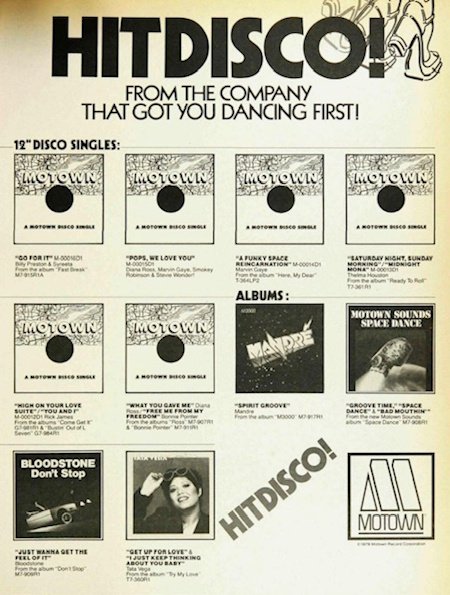
Hits for the dance floor: go for it, say Billy & Syreeta
June 3-6: During the Consumer Electronics Show in Chicago, Motown Sound Systems makes its debut. This will produce and market audio speakers and related components, as well as car radios and speakers, and blank recording tape. It’s reported that products will feature the Motown logo with the slogan, “The Motown Sound,” while initial speaker shipments are expected at the end of this month.
June 17: In conjunction with Father’s Day, Motown releases a red vinyl, heart-shaped, limited-edition of “Pops, We Love You” by Diana Ross, Smokey Robinson, Marvin Gaye and Stevie Wonder.
June 21: Black Enterprise publishes its latest annual ranking of black-owned businesses in the United States, with Motown Industries as the largest such company once again. In 1978, its annual revenues were $58 million.
June 30: Terry Gordy, son of the Motown founder, marries Desiree D’Laura Thomas at St. Bernadette Catholic Church, Los Angeles. His father hosts the wedding reception at his Bel Air estate, with guests including Diana Ross, Alex Haley, Jim Brown and Smokey Robinson.
July 7: According to Record World, former Motown president Barney Ales is appointed president of Rocket Records, Elton John’s label. He left Berry Gordy’s business at the end of last year.
July 15: Thelma Houston, Stevie Wonder and producer Freddie Perren are among those attending the funeral service for Minnie Riperton at the Westwood Village Mortuary, Los Angeles. The singer (whose “Lovin’ You” was co-produced by Wonder) died on July 12.
July 23: After 14 years at CBS, Don Ellis joins Motown Records as executive vice president, creative, in Los Angeles. He only holds the post for nine months.
August 19: Rockabilly and (later) country music singer Dorsey Burnette dies at age 46 in Los Angeles. He recorded for Motown twice, first for its Mel-O-Dy label in 1964, and for Melodyland during 1975-76.
August 24: Marvin Gaye plays the first of four concerts over this weekend at the Circle Star Theater in San Carlos, California.
August 25: For two weeks, Diana Ross’ “The Boss” is Number One on Billboard’s National Disco Action chart.
August 28: Mary Wilson performs at her first solo show in New York with a week-long booking at the Manhattan nightclub, New York New York.
September 8: Berry Gordy’s first hit for his own company, Barrett Strong’s “Money (That’s What I Want),” becomes a Top 5 hit in the U.K. as remade by the Flying Lizards. Gordy produced the original, co-writing the song with Janie Bradford.
September 28: Marvin Gaye sings the national anthem before the televised-live boxing match between Larry Holmes and Earnie Shavers at Caesars Palace, Las Vegas.
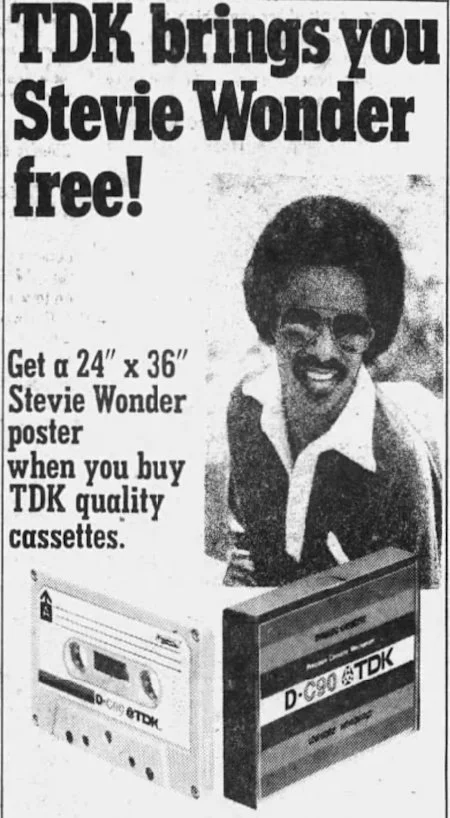
Isn’t home taping killing music?
October: A TDK advertising campaign begins with Stevie Wonder’s endorsement of the blank tape line, a deal forged earlier this year. “TDK brings you Stevie Wonder free!” declares one advert, offering buyers a free poster of the star when buying its cassettes.
October: Stevie Wonder holds listening parties this month in Malibu and the Bronx for his new album, Stevie Wonder’s Journey Through The Secret Life of Plants. It peaks at No. 4 on the Billboard charts in December.
October 1: Movin’ Up, the memoir of the late Berry Gordy, Sr., is published by Harper & Row, with an introduction by Alex (Roots) Haley. “Life is somethin’,” Gordy writes in the introduction. “Life is really somethin’. You just got to know how to live it. There’s lots to learn.”
October 13: Bonnie Pointer’s “Heaven Must Have Sent You” reaches its No. 11 peak on the Billboard Hot 100. It’s Motown’s first digitally-recorded track.
November 9: Frank Wilson’s “Do I Love You (Indeed I Do)” receives its first official release anywhere via the Tamla Motown label in the U.K., by which time it has become one of the most popular tracks on the so-called Northern Soul club circuit.
November 17: Motown earns its only Number One single on the Billboard Hot 100 this year with the Commodores’ “Still,” which rules for one week. In Cash Box, both “Sail On” and “Still” reach the summit for seven days apiece.
November 24: The second volume of 20 Golden Greats by Diana Ross peaks at No. 2 on the U.K. charts, only held from the summit by the second collection of Greatest Hits by Abba.
December: Stevie Wonder is presented with a Braille copy of Pop Gordy’s memoir, Movin’ Up, at a special party hosted by the book’s publisher at the Roostertail nightclub in Detroit. The city’s mayor, Coleman Young, and civil rights pioneer Rosa Parks are among the guests.
December 1: Smokey Robinson’s “Cruisin’ ” cracks the Top 20 of the Record World Top 100 Singles, to be followed by similar progress in other trade charts. It becomes his first major hit as a solo artist, including Number One in Cash Box.
December 2: Stevie Wonder makes a rare New York concert appearance at the Metropolitan Opera House, as part of a tour which also stops in Detroit, Chicago, Philadelphia and Los Angeles. He plays a repeat show at Madison Square Garden on December 7.
December 3: Berry Gordy meets with his financial advisors at Motown’s Los Angeles HQ. The company is bankrupt, they tell him. “You’ve got more liabilities than assets,” says tax attorney Harold Noveck. The cost-cutting initiated earlier in the year is going to have to be continued.
SELECTED SINGLES (by release date)
January 11: Marvin Gaye, “A Funky Space Reincarnation (Part 1),” Tamla 54298
February 6: Rick James, “High On Your Love Suite,” Gordy 7164
February 14: Marvin Gaye/Smokey Robinson/Diana Ross/Stevie Wonder, “Pops, We Love You,” Motown 1455
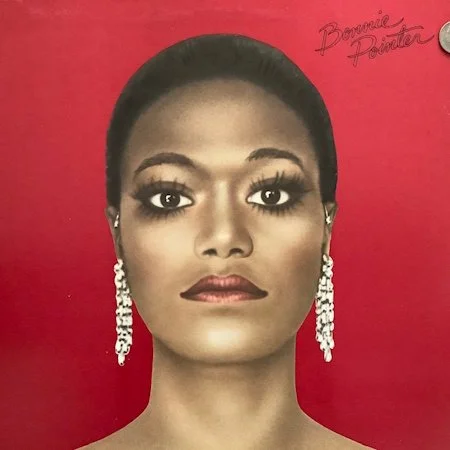
For Bonnie, a heaven-sent solo smash
March 22: Bonnie Pointer, “Heaven Must Have Sent You,” Motown 1459
April 3: High Inergy, “Shoulda Gone Dancin’,” Gordy 7166
April 12: Rick James, “Bustin’ Out,” Gordy 7167
April 12: Tata Vega, “I Just Keep Thinking About You Baby,” Tamla 54299
April 24: Switch, “Best Beat In Town,” Gordy 7168
April 26: Teena Marie, “I’m A Sucker For Your Love,” Gordy 7169
May 10: Diana Ross, “The Boss,” Motown 1462
May 22: Smokey Robinson, “Get Ready,” Tamla 54301
June 8: Shadee, “I Just Need More Money,” Tamla 54302
August 10: Mary Wilson, “Red Hot,” Motown 1467
August 10: Smokey Robinson, “Cruisin’,” Tamla 54306
August 27: The Commodores, “Sail On,” Motown
August 31: Teena Marie, “Don’t Look Back,” Gordy 7173
September 7: Switch, “I Call Your Name,” Gordy 7175
September 14: The Commodores, “Still,” Motown 1474 (R&B #1, pop #1)
September 14: Scherrie & Susaye, “Leaving Me Was The Best Thing You’ve Ever Done,” Motown 1473
September 28: Marvin Gaye, “Ego Tripping Out,” Tamla 54305
October 5: Rick James, “Love Gun,” Gordy 7176
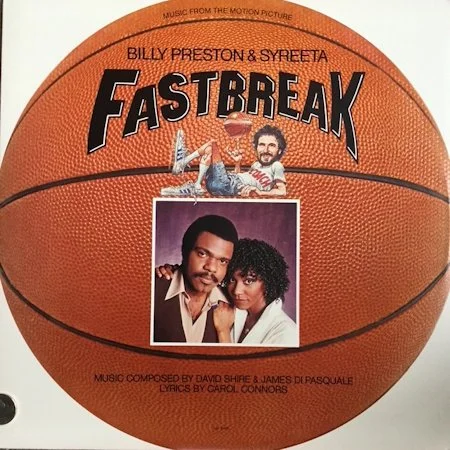
From this soundtrack, Billy and Syreeta were born again
October 12: Diana Ross, “It’s My House,” Motown 1471
October 24: Stevie Wonder, “Send One Your Love,” Tamla 54303
November 2: Billy Preston & Syreeta, “With You I’m Born Again,” Motown 1477
November 16: Bonnie Pointer, “I Can’t Help Myself (Sugar Pie, Honey Bunch),” Motown 1478
SELECTED ALBUMS (by release date)
January: Jackson 5, Boogie, Natural Resources 4013
January: Various, From The Vaults, Natural Resources 4014
January 15: Tata Vega, Try My Love, Tamla 360
January 16: Rick James, Bustin’ Out Of L Seven, Gordy 984
January 16: The 5th Dimension, High On Sunshine, Motown 914
January 16: Bloodstone, Don’t Stop, Motown 909
February 15: T-Boy Ross, Changes, Motown 913
February 15: Mandre, M 3000, Motown 917
March 8: Billy Preston & Syreeta, Fast Break, Motown 915
March 20: Apollo, Apollo, Gordy 985
March 20: Teena Marie, Wild and Peaceful, Gordy 986
March 22: Platinum Hook, It’s Time, Motown 918
April 16: Cuba Gooding, Love Dancer, Motown 919
April 26: Various, Pops, We Love You, Motown 921
May 22: Patrick Gammon, Don’t Touch Me, Motown 922
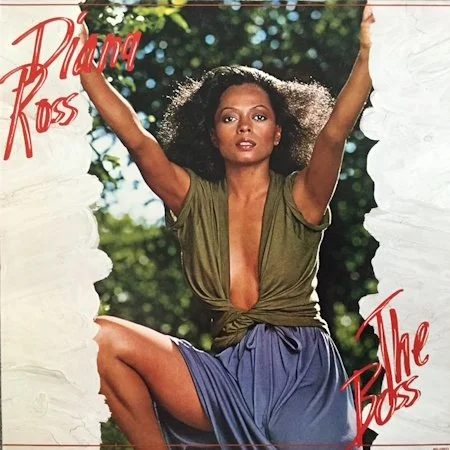
May 22: Diana Ross, The Boss, Motown 923
May 22: Dr. Strut, Dr. Strut, Motown 924
May 22: Smokey Robinson, Where There’s Smoke, Tamla 366
July 24: The Commodores, Midnight Magic, Motown 926 (R&B #1, pop #3)
July 27: Billy Preston, Late At Night, Motown 925
August 23: Mary Wilson, Mary Wilson, Motown 927
October 9: Rick James, Fire It Up, Gordy 990
October 20: Thelma Houston, Ride To The Rainbow, Tamla 365
October 30: Stevie Wonder, Stevie Wonder’s Journey Through The Secret Life of Plants, Tamla 371
November 21: Bonnie Pointer, Bonnie Pointer, Motown 929
*excluding compilation albums. Motown paid Marvin Gaye a $305,000 advance for delivering Here, My Dear, according to David Ritz’s biography of the star, Divided Soul, and Marvin gave that to his ex-wife Anna Gordy after they divorced. She was also supposed to receive whatever royalties the album earned. “When I was doing Here, My Dear,” Gaye told Ritz, “the only politics that interested me were the politics of my divorce.”
Music notes: a year in which there’s new music by Motown’s quartet of solo superstars – together and apart – merits a WGB playlist. Enough said.