Of Roosters and Wolverines
A DETROIT MUSICIAN’S MOTOWN MEMORIES
He played trumpet on hundreds of recording sessions in Studio A. He led the band at Detroit’s Roostertail nightspot for years, and was present for the celebrated “Motown Monday” shows there. And he introduced to Motown the young arranger/conductor who became central to the creation of the most revered album in the company’s history.
Johnny Trudell died five years ago this month, at age 82. His career as a Motor City music maker was decades long, and remarkable. It has also been well-documented, covering his years playing in clubs and nightspots all over Detroit, from the 1950s onwards. He backed showbiz stars such as Bob Hope, Bing Crosby, Sammy Davis, Jr. and Wayne Newton, music legends such as Aretha Franklin, and performed for presidents such as John Kennedy and Bill Clinton.
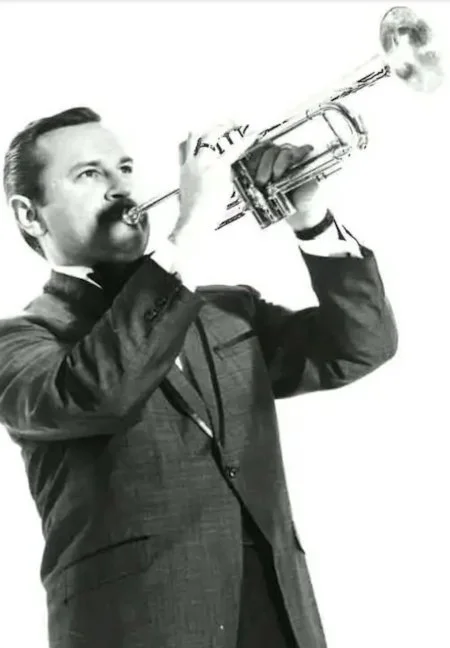
Johnny Trudell: $5 a side, back in the day
“The orchestra leader was a go-to source when a big name would come to town,” noted the Detroit News in its Trudell obituary, “and needed a band to back them up.” Trudell was more direct when he and I spoke years earlier. “I played almost every sewer in town.”
On this occasion, it’s worth sharing some of Trudell’s specific memories about his Motown work and his time at the Roostertail, which showcased many of the Hitsville acts as their popularity began to spread beyond record-buying teenagers.
The particular musician whom Trudell cites as a mentor was Maurice King, whose band, the Wolverines, played at Detroit’s Flame Show Bar for 12 years, after which King joined Motown – “where he wore many hats,” as Berry Gordy once observed, mostly in artist development.
Towards the end of the Wolverines’ spell at the Flame, Trudell jammed with them, substituting for trumpeter Al Aarons, and then he joined King’s crew again in Canada for a short while. He also became acquainted at that time with guitarist Joe Messina, later to become part of the Motown house band.
The Flame Show Bar, of course, was a vital part of Berry Gordy’s early years, where he used to hang out in his twenties, while his sister Gwen owned and operated the photo concession. “It was the most famous of the black clubs,” recalled Trudell, “with a long bar, tables and chairs and booths, and a bandstand. Della Reese played there, Johnnie Ray, Dinah Washington. I remember working with Brook Benton at the Flame.”
Another member of Maurice King’s band at that time was Thomas “Beans” Bowles, whose saxophone and flute skills impressed Gordy enough to hire him for the session which cut Marv Johnson’s “Come To Me,” the very first 45 issued on Tamla.
And it was King who guided Trudell further up the ladder. “Maurice took me to Motown, and introduced me to Hank Cosby, who was A&R director. Hank gave me a chance to play. I could read [music] and on the early Motown stuff, they were using a bunch of young guys who were wanna-be jazz guys. We didn’t have strings or anything at that point, just six or eight horns and a rhythm section. I was able to add something to the music and could play in tune, which was lacking at that point in the brass.
A RAISE IN THE SNAKEPIT
“Beans was a great player, of course, and the saxophones were good, but the trumpets weren’t as strong as they needed to be. I was lucky enough to have a flexibility in the business that I could come and go.” Trudell reckoned that his first Hitsville studio session was in 1962 or ’63, after which he spent about a year with the Tommy Dorsey Orchestra, backing Frank Sinatra, Jr. and travelling around.
“Then I came back home, raised my family and hunkered down at the Roostertail. At the same time, I was working at Motown during the day. It was all day long – I had chops to steal.”
When Trudell blew his first notes in the West Grand basement studio, he earned $5 per side. “That’s one of the things which made me reluctant at first. Well, we worked for a while doing that, and then we got a $2 raise. Earl Van Dyke was kind of our advocate.

The Roostertail on the river (photo: Sublime Moments)
“Anyway, one day the proverbial shit hit the fan. We were all invited down to the Detroit Federation of Musicians, and there was a man who came in from New York, the local 802 of the AFM (American Federation of Musicians), and said, ‘Berry Gordy is going to pay you proper wages or we’re going to put him out of business.’ It was pretty strong stuff as far as I was concerned. So from that time on, we had proper contracts, and we got proper wages, union wages, and they treated us wonderfully.”
Trudell told me that the Motown musicians’ pay rate went up to “around $68 for a three-hour session.” He continued, “It was an extreme amount of money compared to what we were making [before], but at that time, you see, the records were catching on. The company was progressing, it was making money, they could afford it, and we all worked together.”
Then there were the strings. “Gordon Staples was the principal violinist and concert master in the Detroit Symphony, so we’re getting a little sophisticated. I was in charge of the horns and Gordon was in charge of the strings, and Earl [Van Dyke] was in charge of the rhythm section. That’s how it popped out after we’d mixed it all together.”
Bringing in players from the Detroit Symphony marked a sea change, according to Trudell. “Some of the original arrangers from Motown, they weren’t Billy May. Know what I’m talking about? We’re kids. The sound of young America. Some of it was very crude. At night, I’m reading Marty Paich’s charts, and Marion Evans and Quincy, and I’m comparing that sound to what we’re doing in the [Motown] studio, and it doesn’t compute in my mind. But it started to compute.”
For all of this time, Trudell was also working at the Roostertail. “It was,” he said, “the most beautiful nightclub in the whole country. We had all the acts which worked Vegas, Tahoe and Reno – everybody from Tony Bennett, Bobby Darin, the Mills Brothers. Over a period of ten years, I played for every act in showbusiness. I was contracting the musicians upstairs. When I first went to the Roostertail, they wouldn’t give me the band, because I was too young. I went through three sets of owners, and seven bandleaders, before I became the bandleader.”
BRINGING PEOPLE TOGETHER
Trudell’s experience helped when the club began booking Motown’s stars – most memorably, for the “Motown Mondays” of 1966, and for the live albums recorded there by the Four Tops and the Temptations. “When we had those shows,” said Trudell, “we usually used four saxes and two trombones, and three trumpets. That was pretty much as we used in the studio. It was usually Beans and Lefty Edwards and…I can name all the guys. Paul Riser played trombone on some of the stuff.”
The Motown acts started to change the Roostertail, too. Its original owners, Detroit’s wealthy Schoenith family, turned over more responsibility to the next generation, their sons Jerry and Tom. This resulted in a younger crowd coming in – “and, of course, blacker,” said Trudell, “not that it meant anything. That audience followed Motown, but there were a lot of white young people who followed Motown, too. It was a composite of bringing people together. You’re mixing hot rods with Cadillacs.”
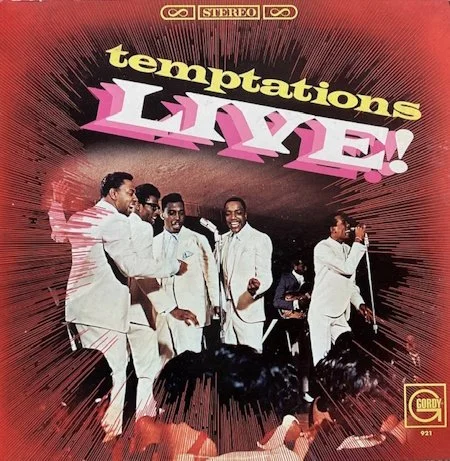
Recorded at the Roostertail
By his recollection, Trudell joined Motown full-time in 1968. “I went to work in an office on the Boulevard, they needed some organisation in there, in the arranging department. It was getting pretty chaotic. Trying to organise those guys was like trying to capture the sea.” To help, he brought in a young, jazz-oriented local musician who had briefly played in his band years earlier: David Van DePitte.
“He was like my young brother,” said Trudell, “and he was in the Roostertail band for a short time. He was a trombone player and he played bass. I always viewed him as another Billy May, Nelson Riddle, Neal Hefti. He was in that league. David would write a chart without a keyboard and would write the parts out for you. When he was with me at the Roostertail, I took his tapes to Hank Cosby and said, ‘We’ve got to get this guy in here.’ ”
Van DePitte himself told me that when he was appointed, Motown “knew they were going to try to get into the movie business. I was hired specifically so that when they did, they had somebody who could deal with that type of thing. I had been doing a lot of industrial-type films, and although that’s not movies, the principles are basically the same.”
By 1970, Van DePitte was a fixture among the company’s arrangers. When word of a new project by Marvin Gaye started to circulate, he swiftly learned that the singer was not popular with his fellow arrangers. “They had all worked with him before,” he explained, “and found him to be such a pain in the fanny that they didn’t want to deal with him. Somebody said to me, ‘Guess what? You’re elected.’ ”
So it was that he – not yet 30 years of age – became involved with What’s Going On, playing such a crucial role that his name was featured on the album’s front cover: “Orchestra conducted and arranged by David Van DePitte.”
And the musician who played trumpet on those sessions? Johnny Trudell, naturally. “David’s introduction to Motown was through me, and mine was through Maurice King. That’s how it kinda blossomed – like a tree.”
Music notes: Johnny Trudell’s trumpet is undoubtedly heard on hundreds of Motown recordings, but identifying them with certainty is nigh impossible. His name’s appearance in the musician credits on What’s Going On was a rare acknowledgment, and he stopped working with Motown arrangers and producers after the company moved west in 1972. But he maintained connections with former members of the Hitsville team, and in 1979, recorded an album, Dream Dance, for Detroit’s VR Records. (The title track was co-produced by David Van DePitte.) VR’s staff included longtime Motown promotion whiz, Gordon Prince. Then, in 1993, Trudell had an album, But Beautiful, issued by AEM Records, the label set up by former Motown chief, Barney Ales.