Relighting Willie's Fire
A SOULFUL CATALOGUE OF SONGS IS SHOWCASED ANEW
They all concurred that it was the early hours of the morning, even if the exact times varied a little.
When producer Hal Davis and songwriter Willie Hutch called Berry Gordy, it was five a.m. “They and another writer, Bob West, had the makings of a hit tune for the Jackson 5,” Gordy recalled in To Be Loved, “but wanted my help. I told them, ‘It better be good.’ ”
“I work late at night,” Davis once pointed out to me, saying that it was three a.m. when he and Hutch got together at the Sound Factory studio in Hollywood. The producer had summoned the songwriter during darkness. “His wife was mad at me.”
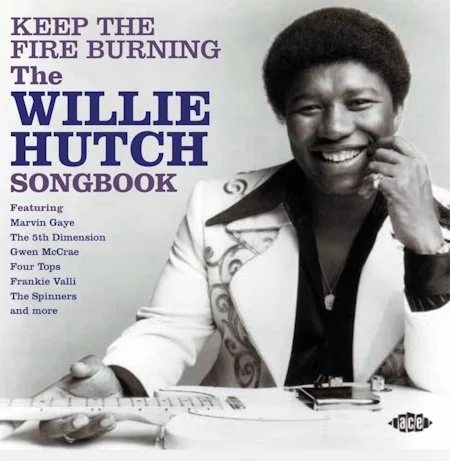
Available from Ace on November 27
Davis continued, “I’m the only guy who Berry would give me his number and say, ‘Call me. But if you call me, it’s got to be a hit or you’re fired.’ So I called Berry, and said, ‘I’m working over here with Willie, it’s a smash.’ He said, ‘Come on up.’ ”
Hutch’s own recollections are roughly in line. “Hal came to my house at about 3:45 in the morning, knocking on the door. He said, ‘Look, I’ve got this track, the chairman loves it, but he doesn’t like the song, and all I’ve got is the track and the title.’ So I wrote two songs to it, two types of lyrics. One was more or less a brotherhood kind of lyric, and the other was more guy-girl.
“So at eight o’clock that morning, I was up at Berry’s house. I had both songs, and Berry listened for about 15 minutes. And he said, ‘OK, that’s a smash. Set up studio time for one o’clock.’ ”
The smash, of course, was “I’ll Be There,” the Jackson 5’s fourth consecutive Number One on the U.S. pop charts. But why now to recall once again the story of its birth?
Because later this month, Ace Records in the U.K. is releasing Keep The Fire Burning: The Willie Hutch Songbook on its Kent imprint: a new compilation of the Motown writer’s work, as recorded by everyone from the 5th Dimension to the Friends of Distinction, from Ben E. King to Jerry Butler, from the Four Tops to Marvin Gaye.
“I’ll Be There” remains Hutch’s most successful copyright, co-written with Davis, Gordy and West, the song’s original author. It has been covered by scores of singers and musicians over the past 50-plus years, including Andy Williams, Skeeter Davis, Marcus Miller, Byron Lee, Gloria Gaynor, Darlene Love, Human Nature, Westlife, Il Divo and Mariah Carey, whose 1992 remake propelled it back to the top of the Billboard and Cash Box pop charts. In Keep The Fire Burning, there’s a 2021 version by British soul singer, Gabrielle. “She does it proud,” comments Tony Rounce, who compiled the Ace CD and wrote its liner notes.
PREVIOUSLY-UNISSUED KIM
What makes the 23 tracks enjoyable is the variety of (mostly) R&B and soul stylists who perform them. In addition to those named above, they include Gwen McCrae (doing the album’s title track), Sisters Love (“Mr. Fix It Man”), the Main Ingredient (“California My Way”), the Marvellos (“You’re Such A Sweet Thing”) and Kim Weston (“I’m Moving On,” previously unissued). Among the seven Motown acts represented are G.C. Cameron and Jr. Walker, while Hutch’s own recording, “Easy Does It,” originates from his time with Norman Whitfield’s label. “It was one of the few tracks on his first Whitfield album, In Tune, that upheld the almost impossible standards of his very best Motown work,” writes Rounce, “yet amazingly was ignored in the U.S., and the only place it was issued on 45 was here in the U.K.”
Another track heavily influenced by the classic Motown sound is the 5th Dimension’s “Train Keep On Movin’.” This joyous outing was written by Hutch and produced with Marc Gordon, who subsequently steered the group to stardom at Johnny Rivers’ Soul City Records after they were turned down by Berry Gordy.
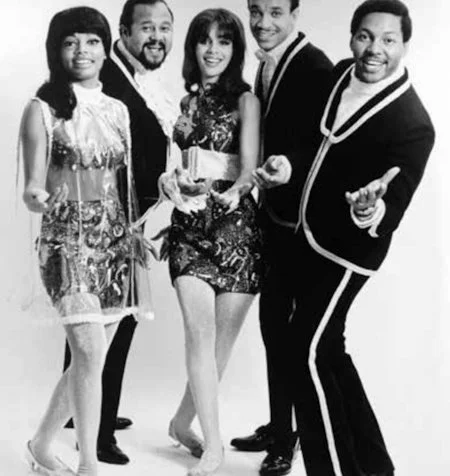
The 5th Dimension: California their way (and Willie’s)
Before they became the 5th, the quintet was known as the Versatiles, whose debut single, “You’re Good Enough For Me,” was spontaneously performed for yours truly by Marilyn McCoo and Florence LaRue during an interview many moons ago. On their first Soul City album, the 5th cut a pair of Willie Hutch compositions, “Learn How To Fly” and “California My Way.”
“I work all kinds of ways,” Hutch reminisced for me, 35 years ago. “It’s like some of us, I guess, blessed with the grace of God to have an occupation that you love doing. And writing, creating is something I love doing. I have done it so many different ways. I have my own studio, and sometimes I’ll sit here at three, four o’clock in the morning, I’ll do a little piece of music, go to my car, put it in [the tape deck] and ride down the highway for miles and miles.”
Hutch also remembered the circumstances of his first project with the Jackson 5. After completing “I’ll Be There,” he said, “Everybody was standing around, so I told them, ‘OK, well, I’ve written the song and everything.’ I was independent, I wasn’t with [Motown] then. I said, ‘Well, tell you what, I’ve done my job, you guys have got it now.’ And I was getting ready to leave, and they said, ‘Oh, no, no, no – don’t leave. We want you to dub [the Jackson 5] in. So I wound up dubbing the group in.”
It was the Sound Factory where the “I’ll Be There” backing track was recorded, according to Hal Davis, but the vocals were done at the Record Plant, on the same day – or night – that Hutch and Davis worked on writing it. The lead was performed by Michael Jackson, who later described it as “our real breakthrough song.” Brother Jermaine handled the vocals at the bridge, and the group – augmented by other backup singers – contributed harmonies.
“And, in fact, I sang in the background with them,” said Hutch, which he also did for the Jackson 5’s “Never Can Say Goodbye,” Michael’s “Got To Be There” and “all the Christmas stuff” recorded by the siblings. “Me and my brother Richard used to do all of that.” For “I’ll Be There” and more, Hutch also did the vocal arrangements.
‘THE BETTER OF THE TWO’
Another notable track on Keep The Fire Burning is Kim Weston’s “I’m Moving On,” authored by Hutch and produced with Mickey Stevenson. This was after the latter had left Motown in 1966 and set up his Venture label in partnership with MGM Records. Tony Rounce points out in his liners that Hutch created several songs for Venture, “many of which went unheard until Ace signed a deal to represent Stevenson International in the U.K. a few years back.”
The Weston recording and another Venture track, Clyde Moultry’s “We Got A Thing Goin’ On,” were in Stevenson’s tape inventory “for decades,” according to Rounce. “I’m Moving On” was also recorded by Kim and Willie as a duet, “but her solo version is the better of the two,” he advises.
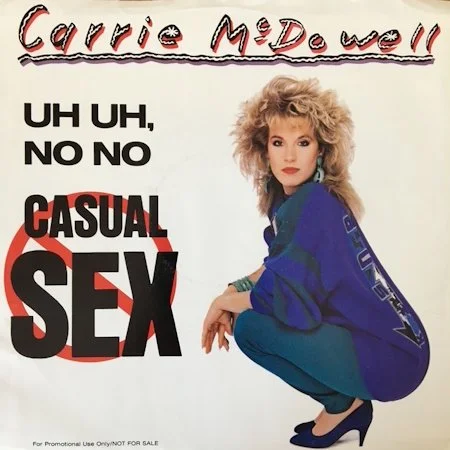
‘A record the world needs’
Not represented in the Ace/Kent compilation is one of Hutch’s most publicised – and least successful – compositions: “Uh Uh, No No Casual Sex” by Carrie McDowell. With its safe-sex lyric theme, the recording was released by Motown as a 45 and a 12-inch single in 1987, when the AIDS epidemic was consistently in the headlines. “I have a teenage daughter,” Hutch told the Los Angeles Times that summer, “and I felt it was time to make a statement.” (He originally thought of calling the song “Mr. Promiscuity.”)
For the newspaper, Berry Gordy even weighed in. “Willie impressed me when he said, ‘This is the most important song I’ve written. I can’t cure AIDS. But I can try to create a hit song to make people conscious of it.’ ” Gordy added, “It’s a record the world needs. [Hutch] said, ‘I want to save lives with this.’ ” Unfortunately, the world failed to respond: the record failed to make the U.S. pop charts, scoring only a No. 38 peak on the Billboard dance/disco countdown. In the U.K., it reached No. 68.
Nonetheless, that did not dim Hutch’s legacy. Years before, the calibre of his writing and his work as a producer had ensured as much. And two of the songs for the soundtrack of 1973’s The Mack were Top 20 R&B hits for Willie as a singer, while “Love Power” went Top 10 R&B in 1975, only just missing the pop Top 40.
He also claimed the privilege of co-producing the first solo album by Smokey Robinson. “Suzanne de Passe had mentioned [to Robinson] that maybe he should try working with other producers,” Hutch remembered. “So Smokey called me up and said, ‘I want you to cut two tracks with me.’ When I cut the two tracks, he called me back and said, ‘Willie, I want you to do the whole album.’ ”
But perhaps not at four o’clock in the morning…
Music notes: Keep The Fire Burning finely showcases the late Willie Hutch’s songwriting talent. Further evidence of the latter, if needed, is provided in this WGB playlist. It offers some of the acts from the Ace/Kent compilation (but with different tracks) as well as others who recorded his material. Among the latter are Etta James, the Spinners, Johnny Rivers and Hutch himself, with his own take on “I’ll Be There” (from 1973) and his last R&B hit for Motown, “In And Out” (1982). Finally, there’s a 21st century interpretation of “Hello, Detroit.” The song’s 1984 original by Sammy Davis Jr., produced by Hutch and co-written with Berry Gordy, doesn’t seem to be digitally available; the musicians on the version here by Bob St. Thomas include Funk Brother Uriel Jones on drums.