The Upside of ‘Stranger Things’
NETFLIX SCI-FI SHOW RETURNS DIANA TO THE CHARTS
There are at least two books which, had they been published, might have revealed greater insights into the unfortunate drama involving Diana Ross and Chic’s Nile Rodgers and Bernard Edwards over her last major hit album for Motown.
Why raise this topic again, more than 45 years later? Because of “Upside Down,” of course — the lead track of 1980’s diana, written and produced by Rodgers and Edwards, and which recently returned to favour via the soundtrack of the final series of Stranger Things, the Netflix TV phenomenon.
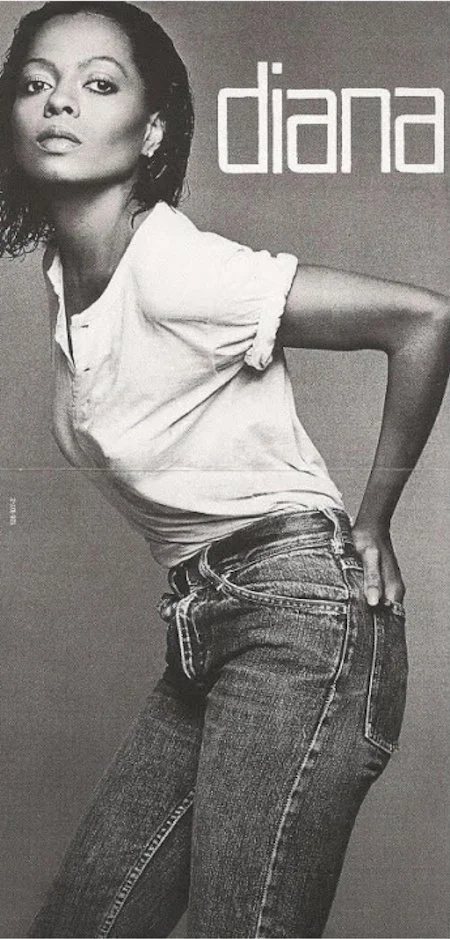
That Francesco Scavullo cover shot
This has not only been to the benefit — financial and reputational — of Rodgers (sadly, Edwards died in 1996) but also to Ross, for whom “Upside Down” made a chart comeback at home and abroad in December, and who performed the song in her headlining stint on Dick Clark’s New Year’s Rockin’ Eve with Ryan Seacrest. That ABC-TV special was viewed by an estimated 19 million Americans around midnight, when Ross was on screen.
“Upside Down” was featured in The Crawl, the first episode of the fifth and final season of Stranger Things, released on November 26. Of the four music tracks therein (another of which was Michael Jackson’s “Rockin’ Robin”), the Ross recording saw the greatest gain, according to Billboard, with a total of 953,000 streams on digital music services in the week after broadcast.
The surge also led to Ross reaching a Billboard chart which she’s never previously occupied — R&B/Hip-Hop Digital Song Sales — because it didn’t exist during her hit-making prime. There, “Upside Down” ranks at No. 4 this week.
The track was already the Motown superstar’s most successful solo single since leaving the Supremes, with four weeks at the peak of the Billboard Hot 100 in September 1980 and 29 weeks on the chart. Such popularity helped to power diana to No. 2 on the Billboard Top 200 LPs & Tapes, making it Ross’ first to get that close to the summit since 1972’s Lady Sings The Blues soundtrack.
So what was the fuss around diana?
Nile Rodgers wasn’t afraid to offer his perspective almost immediately after the album’s release in May 1980. “The basic problem was that we had two different concepts of what [Diana’s] voice should sound like,” he told Billboard’s Jean Williams. “Once we got into the latter stages of the project, Diana heard some things a certain way and we heard them another way. When it got to a point where she wanted her voice to sound a certain way, we couldn’t take responsibility for it because that’s just not how we make records.”
Nonetheless, the pair submitted for Ross’ approval the final tapes of the album as she recorded it and as they conceived it. “Motown called us up,” Rodgers subsequently told me, “and said, ‘Guys, we really have a problem with this mix.’ Then Diana calls us up and says, ‘I don’t know why you have my voice so low.’ You know what the problem was? We had more bass than they ever had on records before!”
Years later, Rodgers was more candid in his autobiography, Le Freak: An Upside Down Story of Family, Disco and Destiny. “We were devastated. This was the most important project since our debut, and everybody hated it – everybody except us. Motown stopped communicating with us altogether. We didn’t merit so much as a single reassuring word. Not even from Diana. Then Motown demanded all the tapes back from the session and we finally got it: we’d been fired.”
At that point, the record company had the album remixed by its own sound engineer, Russ Terrana. “It seemed like a Chic album with a Diana Ross voice. It wasn’t a Diana Ross album,” he told dance music historian Brian Chin, who wrote liner notes for a 2003 deluxe CD repackage of diana, which contained both the original Chic mix and Terrana’s revision.
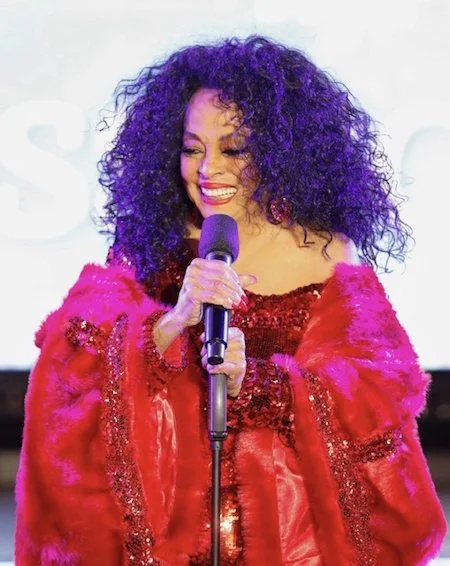
Diana on New Year’s Rockin’ Eve
“I’d worked for her for so long, so I came in knowing the kind of person she is and the kind of excitement she likes to create,” continued Terrana. “There was plenty of excitement in the tracks. I tried to create the dynamics that seemed missing, so you could feel the emotions change, and hear the subtleties already in the music.”
What neither Ross nor Motown altered were the lyrics of the songs, not least because she wanted them to reflect her evolving life. As Rodgers recalled in The Billboard Book of Number One Rhythm & Blues Hits, “She said, ‘I don’t want this to sound like L.A. at all. I left California, I’m in New York. I’ve got a whole new life here.’ ”
She was also about to sign with a whole new record company. “Only she knew this was her last record on Motown,” said Rodgers. “We had no idea.” That much became apparent when he and Edwards did the media rounds for diana. The pair told Canadian journalist Alfred Carl that their next album for Ross would have a “renaissance” sound to the music, using instruments like the flute, and would demonstrate an aspect of the singer’s voice showing a “classical” side. There turned out to be no such album.
But, hey, what about those non-books?
In the early 2000s, Ross made a deal with HarperCollins’ Regan imprint for her second autobiography, after 1993’s Secrets Of A Sparrow. The singer was due to deliver Upside Down: Wrong Turns, Right Turns and the Road Ahead for publication in 2003. “What readers will discover in this moving memoir,” said Judith Regan, head of Regan Books at the time, “is that no one is immune from the pain of loneliness, abandonment, divorce and all of the losses and challenges we each face in our lives.” A brief excerpt showed up in publishing circles, but the “moving memoir” never materialised in public.
Years before, Motown executive Suzanne de Passe contracted with Random House for her autobiography. Among many career highlights, she had been the instigator of the Ross project with Rodgers and Edwards, impressed as she was by Chic’s sound and success, and keen to have the singer teamed up with the music industry’s hottest new hitmakers. But so far, de Passe’s memoir has not seen the light of day.
Given the drama of diana – not to mention platinum-level sales worldwide – it seems likely that both Ross and de Passe would have written about the album, honestly.
Stranger things have happened, right?
Music notes: all credit to Diana Ross for approving the 2003 deluxe edition of diana with both the original Chic version and the Russ Terrana remix (it’s hard to imagine Motown/Universal Music Enterprises issuing that without her say-so). This Spotify playlist features both versions of “Upside Down,” as well as “Telephone,” co-written by Bernard Edwards, from 1984’s Swept Away album (Edwards and Rodgers play on the track, too). Also, there’s “Workin’ Overtime,” the title song of Ross’ 1989 return-to-Motown album, produced by Rodgers; a remix of “Upside Down” by Matiz and 16 A.C. from 1993; and MC Lyte’s “Cold Rock A Party,” which sampled “Upside Down” and took it back to the pop charts in 1997.
Accuracy notes: strictly speaking, Diana Ross did mention working with Nile Rodgers and Bernard Edwards in Secrets Of A Sparrow, but barely more than a few sentences – and nothing controversial. (Thanks to Frans de Beer for pointing that out.)